Placil TAct™ PIS-080 Plastic Identification System | Yamamoto
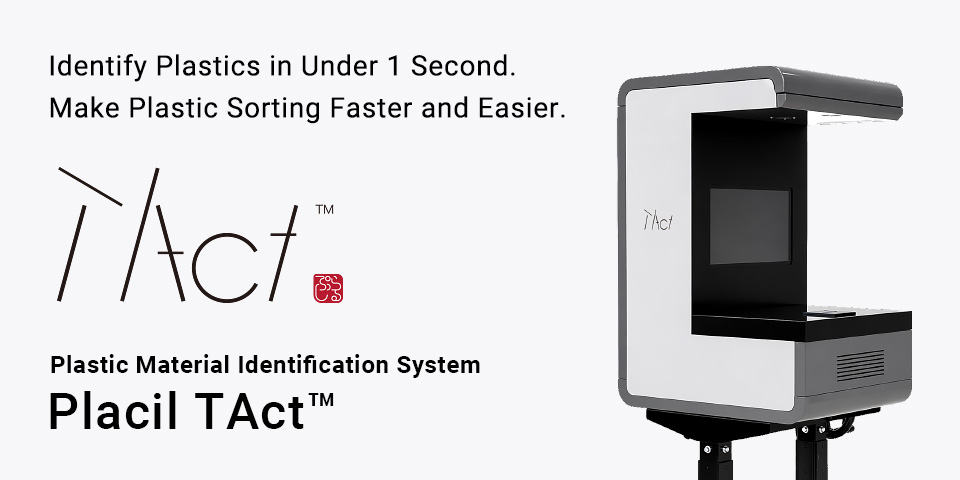
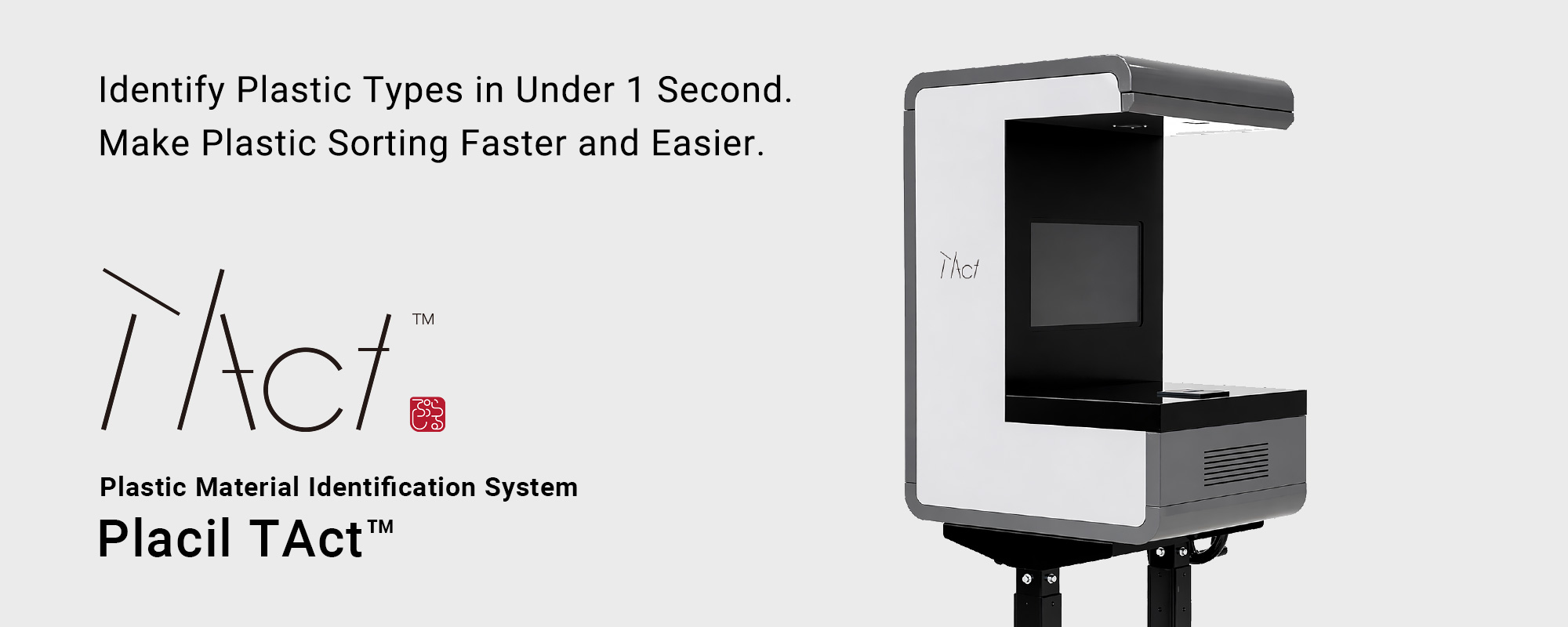
Identify Plastic Types in Under 1 Second.
Make Plastic Sorting Faster and Easier.
Plastic Material Identification System Placil TAct™ [PIS-080]
What is Placil TAct™?
Placil TAct™ is a stationary plastic material identification system designed to make plastic sorting at recycling facilities faster, easier, and more consistent.
Identifying plastic types has traditionally relied heavily on operator experience, using characteristics such as touch, flexibility, odor, and how the material burns. These methods can be time-consuming, and results may vary depending on the operator.
In day-to-day sorting operations, recyclers face challenges such as:
● Quickly identifying plastic types while handling large volumes of material
● Keeping both hands free for efficient sorting
● Identifying transparent plastics and irregularly shaped objects
● Achieving consistent results regardless of operator experience
Placil TAct™ was developed to address these challenges. Simply hold an item in front of the sensor, and the system quickly identifies the plastic type. Its stationary, non-contact design allows operators to keep both hands free, helping make the sorting process faster and smoother.
More than simply identifying plastic types, Placil TAct™ is designed to improve the entire sorting workflow and make material identification easier and more consistent for operators.
Interested in Placil TAct?
Contact Us to Learn More.
Having Challenges
with Plastic Material
Identification?
Need to separate specific plastic types from the rest
Material identification takes too long, making it difficult to sort large volumes of plastic efficiently
Want to avoid potentially hazardous identification methods, such as checking odor by burning plastic
Need a hands-free solution for more efficient sorting
Existing material identification systems are too expensive to justify
Transparent plastics and irregularly shaped objects can be difficult to identify
Placil TAct™
Helps Solve These Challenges
Identify Plastic Types in Under 1 Second
Simply hold an item in front of the sensor for identification in under one second, enabling efficient sorting even when processing large volumes of plastic.
Hands-Free Stationary Design
The stationary design eliminates the need to hold a device, allowing operators to use both hands and work more efficiently.
Designed for Transparent and Irregularly Shaped Plastics
By combining reflected-light and transmitted-light measurements, Placil TAct™ is designed to identify transparent plastics and irregularly shaped objects that can be difficult to measure using reflected light alone.
Cost-Effective Design
By focusing on the functions needed for plastic material identification at recycling facilities, the system is optimized to deliver the essential performance needed for sorting while keeping costs down.
Placil TAct™
Product Videos
Placil TAct™ Product Overview
How Placil TAct™ Identifies Plastic Materials
Interested in Placil TAct?
Contact Us to Learn More.
Key Features of Placil TAct™
01
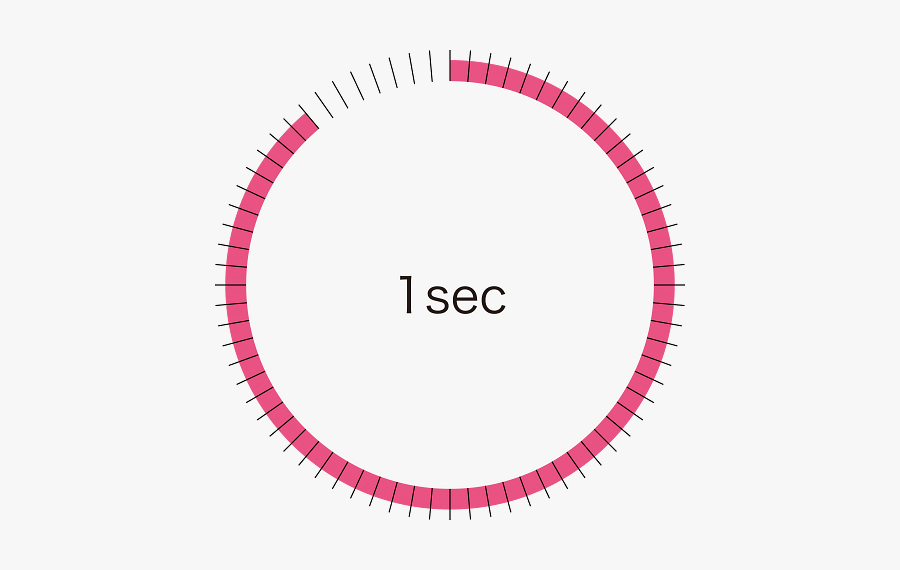
Identification in Under 1 Second
By optimizing the time required for the light source to activate while taking real-world operating conditions into account, Placil TAct™ achieves fast material identification in under one second. This helps operators sort large volumes of plastic more efficiently.
02
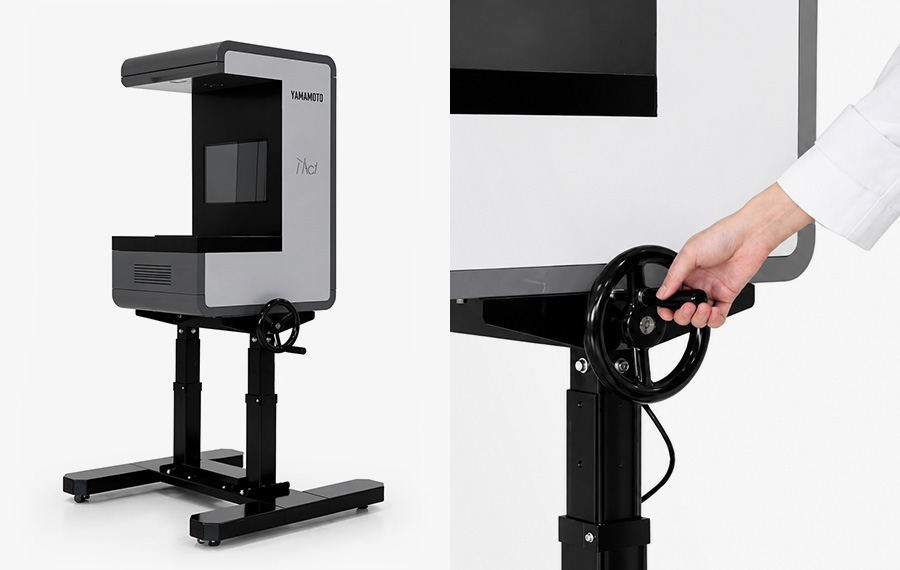
Hands-Free Stationary Design
The stationary design eliminates the need to hold a device, helping keep the sorting process moving smoothly. Operators can use both hands, making day-to-day sorting easier and more efficient.
03
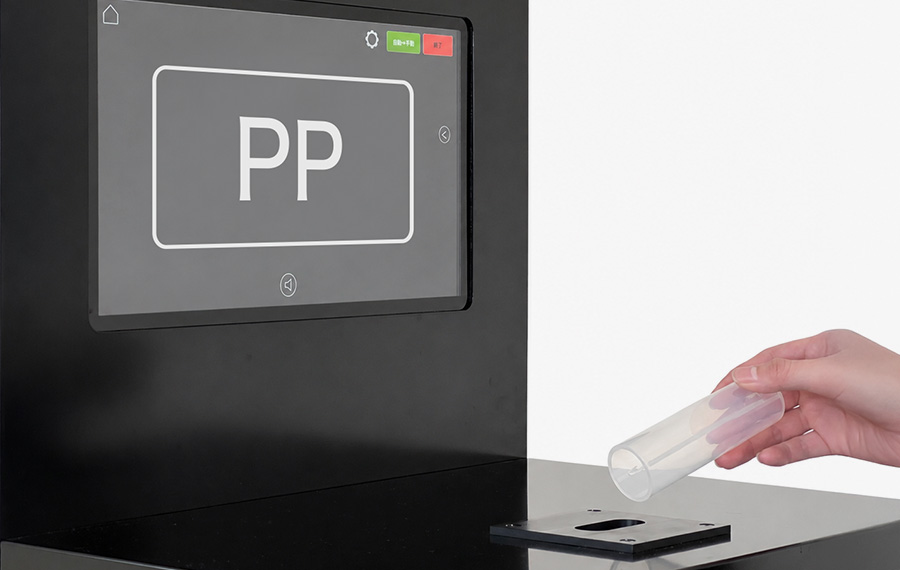
Clear, Easy-to-Read Results
To help operators sort plastics regardless of their knowledge or experience, identification results can be displayed not only by material name, but also by number, letter, or color. The display can be customized to match the needs of each facility, helping improve sorting accuracy and reduce identification errors.
04

Simultaneous Reflection and Transmission Measurement
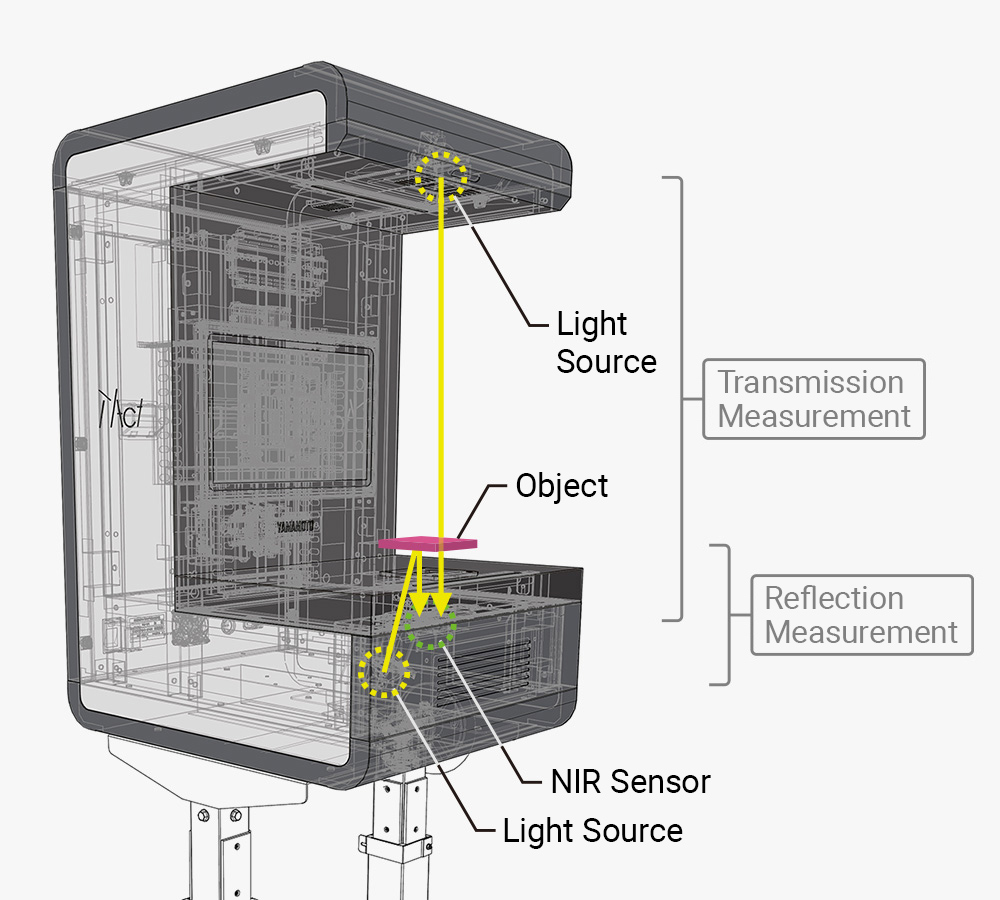
Placil TAct™ uses a single near-infrared (NIR) sensor with two light sources: one for reflection measurement and one for transmission measurement.
In reflection measurement, light is directed at the object and the reflected light is measured. In transmission measurement, light passing through the object is measured.
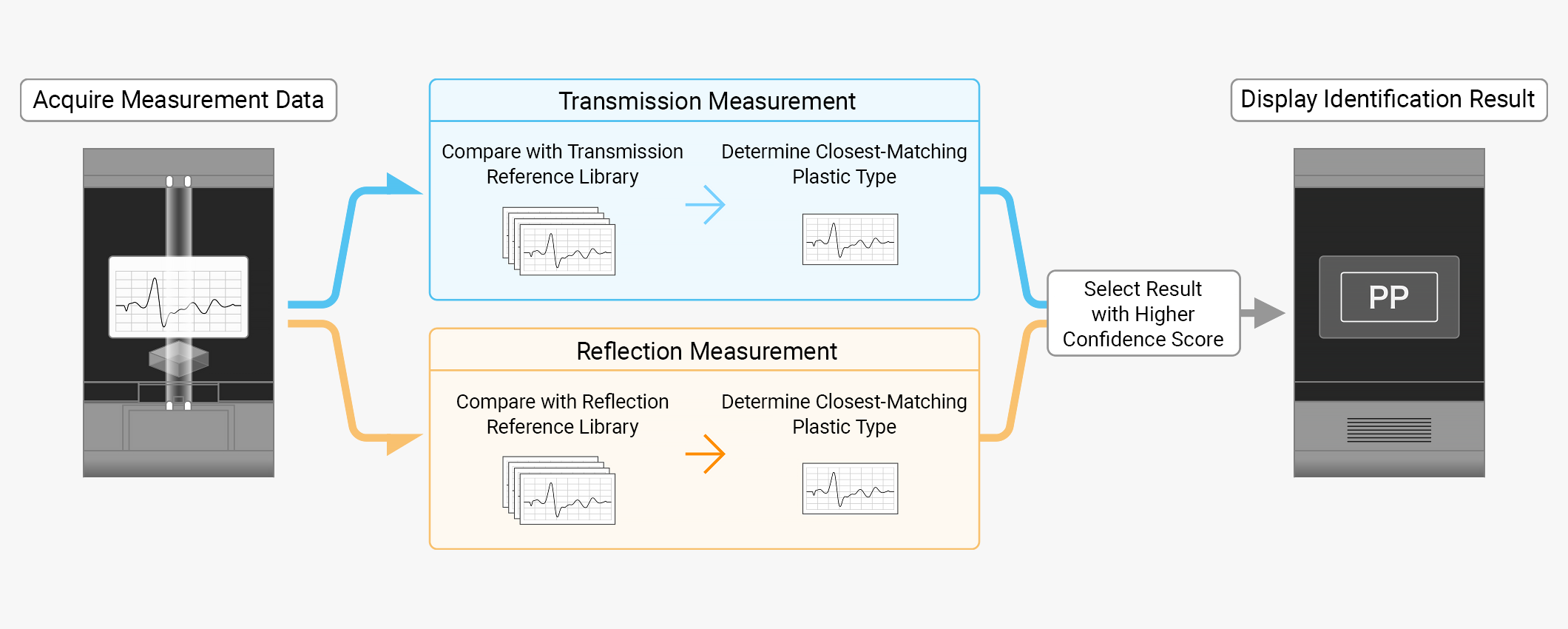
Placil TAct™ collects data using both reflection and transmission measurements and compares the results with its plastic identification library. The system then uses the result with the higher confidence level as the final identification result.
This dual-measurement approach makes it easier to identify transparent plastics and irregularly shaped objects that can be difficult to measure using reflection alone.
Our Approach to Product Development
From Identification to Sorting.
Keep Your Sorting Process Moving.
Identifying plastic types is only one part of the sorting process. In real-world recycling operations,
material identification can create challenges that slow down the entire workflow.
For example:
● Material identification can take time, making it difficult to efficiently sort large volumes of plastic.
● Identification methods that occupy one or both hands can interrupt the sorting workflow.
● Transparent plastics can be difficult to identify, while non-contact measurement can be challenging with irregularly shaped objects.
Placil TAct™ was developed to address these real-world sorting challenges, with a focus on ease of use in recycling operations.
Our goal is not simply to identify plastic types, but to keep the entire sorting process moving smoothly and efficiently.
With intuitive operation that anyone can use and reliable identification across a wide range of objects,
Placil TAct™ helps keep materials moving through the sorting process and on to recycling.
Interested in Placil TAct?
Contact Us to Learn More.
Traditional Methods
for Identifying Plastic Types
Traditional methods for identifying plastic types include observing how the material burns, checking its transparency, bending it, or placing it in water to see whether it floats or sinks.
However, these methods are not always practical or reliable. In many recycling operations today, accurate plastic identification still depends on experienced workers with specialized knowledge and skills.
Identification by Burning
One traditional method is to observe how a plastic behaves when burned. Characteristics such as whether it produces black smoke and the odor generated during burning have historically been used to help distinguish different plastic types.
| Characteristic | Plastic Types |
|---|---|
| No black smoke | Polyethylene (PE), Polypropylene (PP), Acrylic (PMMA), Polyamide (PA), Polyacetal (POM) |
| Produces black smoke |
Polystyrene (PS), Polyvinyl Chloride (PVC), ABS, Polycarbonate (PC) |
Identification by Transparency
Another method is to distinguish plastics based on their appearance and degree of transparency.
| Characteristic | Plastic Types |
|---|---|
| Clear and colorless | Polystyrene (PS), Polyethylene Terephthalate (PET), Acrylic (PMMA), Polycarbonate (PC) |
| Translucent / Milky White |
Polyethylene (PE), Polypropylene (PP), Polyacetal (POM) |
| Opaque | Polyvinyl Chloride (PVC), ABS |
Identification by Bending
Plastics can also be distinguished by observing how they behave when bent, such as whether they crack, turn white, or show little visible change.
| Characteristic | Plastic Types |
|---|---|
| Cracks | Polystyrene (PS), Acrylic (PMMA) |
| Turns White | Polyvinyl Chloride (PVC), ABS |
| No Change | Polyethylene (PE), Polypropylene (PP) |
Identification by Float/Sink Test
Another traditional method is to place the plastic in water and observe whether it floats or sinks.
| Characteristic | Plastic Types |
|---|---|
| Floats | Polyethylene (PE), Polypropylene (PP) |
| Sinks | Polystyrene (PS), Polyethylene Terephthalate (PET), Polyvinyl Chloride (PVC), Acrylic (PMMA), Polycarbonate (PC) |
How Material Identification Works
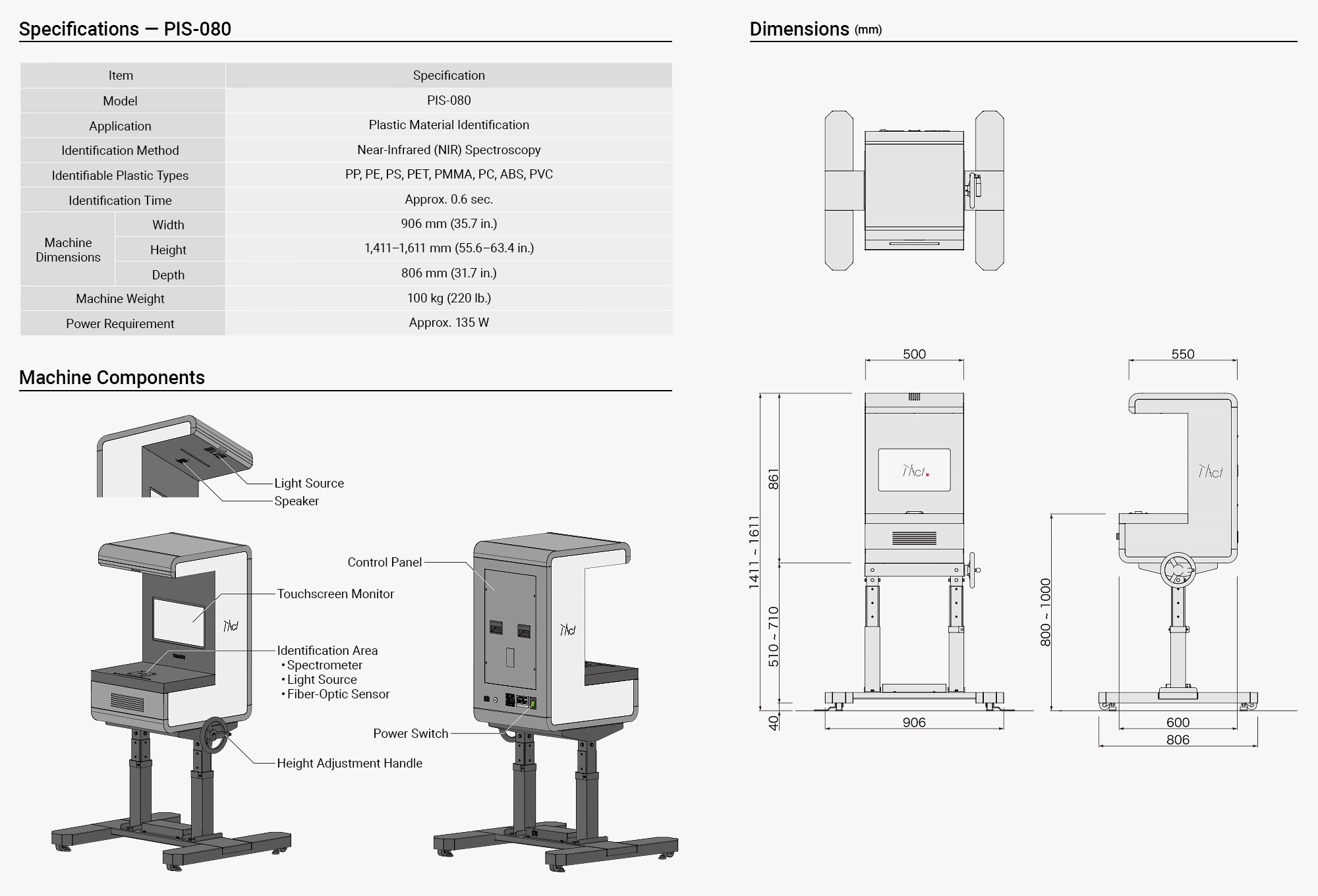
Placil TAct™ uses near-infrared (NIR) spectroscopy to identify plastic types.
Near-infrared light is directed at the object, and the system measures spectral data from both the light reflected by and transmitted through the material. The acquired data is compared with pre-registered reflection and transmission reference libraries, and the closest matching plastic type is identified.
By combining transmission measurement with conventional reflection measurement, Placil TAct™ provides reliable identification across a wider range of object shapes and conditions, including transparent plastics and irregularly shaped objects that can be difficult to measure using reflection alone.
Identifiable Plastic Types
Optimized for 8 Common Plastic Types
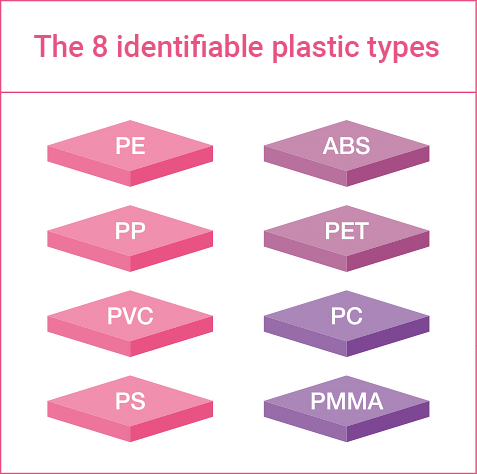
Placil TAct™ identifies 8 plastic types commonly encountered in plastic sorting and recycling operations.
Rather than attempting to identify an overly broad range of materials, the system focuses on widely used plastics to provide fast, practical, and easy-to-understand identification for day-to-day sorting operations.
The 8 identifiable plastic types are:
PE — Polyethylene
PP — Polypropylene
PVC — Polyvinyl Chloride
PS — Polystyrene
ABS — Acrylonitrile Butadiene Styrene
PET — Polyethylene Terephthalate
PC — Polycarbonate
PMMA — Polymethyl Methacrylate (Acrylic)
When a material does not match any of these 8 plastic types, Placil TAct™ displays “Unknown.” This makes it easier for operators to recognize materials that require further evaluation and helps reduce the risk of mixing different plastic types during sorting.
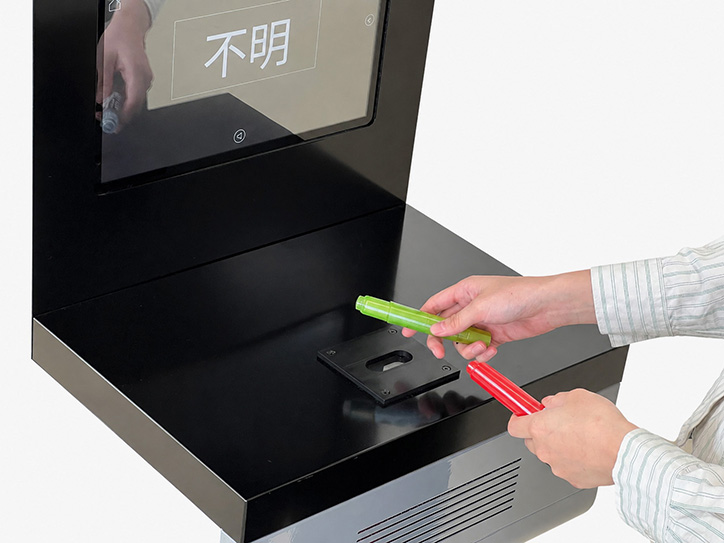
Materials outside the 8 identifiable plastic types are displayed as “Unknown.”
FAQ
Can Placil TAct™ identify black plastics?
Black plastics absorb near-infrared light, making it difficult to obtain the reflected spectral data needed for material identification. However, some lighter shades of gray may be identifiable. Please contact us to discuss your specific material.
Can Placil TAct™ identify transparent plastics?
Yes. Placil TAct™ combines reflection and transmission measurements, making it easier to identify transparent plastics even when sufficient reflected light cannot be obtained.
What sizes and thicknesses of plastic can Placil TAct™ identify?
Placil TAct™ is well suited to identifying objects approximately 10 × 10 mm (0.4 × 0.4 in.) or larger. Thin, transparent films can also be identified.
Are there any consumable parts that require periodic replacement?
No periodic replacement of consumable parts is normally required.
Interested in Placil TAct?
Contact Us to Learn More.
Contact Us
Please wait a moment for the inquiry form to appear.
If the form does not appear after a short wait, please contact us here.