Case Studies | Yamamoto Recycling Equipment
Dual Densification System Significantly Reduces Electricity Costs
Application
Densification of EPS Foam (Fish Boxes)
Industry: Seafood Markets
Product: Foam Densifiers
Model: RE-E2000/3000
Country: Japan
Located in Nagasaki Prefecture, Japan, an area surrounded by the East China Sea and the Goto Islands and blessed with rich fishing grounds, this fish market handles a wide variety of seafood throughout the year. Approximately 2,500 EPS fish boxes, weighing about 450 kg (990 lb), are generated each day. The fish market association had previously been processing the discarded EPS fish boxes with two foam densifiers from another manufacturer, each with a processing capacity of 150 kg/h (330 lb/h).
Operating both densifiers simultaneously increased electricity consumption and resulted in high demand charges, leading to higher basic electricity costs. To reduce these costs, the association limited simultaneous operation of the two machines and adjusted operating hours to avoid peak electricity demand. However, this made it difficult to secure sufficient time for densification. In addition, shredded EPS and discharged densified materials (ingots) sometimes scattered around the work area, requiring considerable time and effort for cleanup.
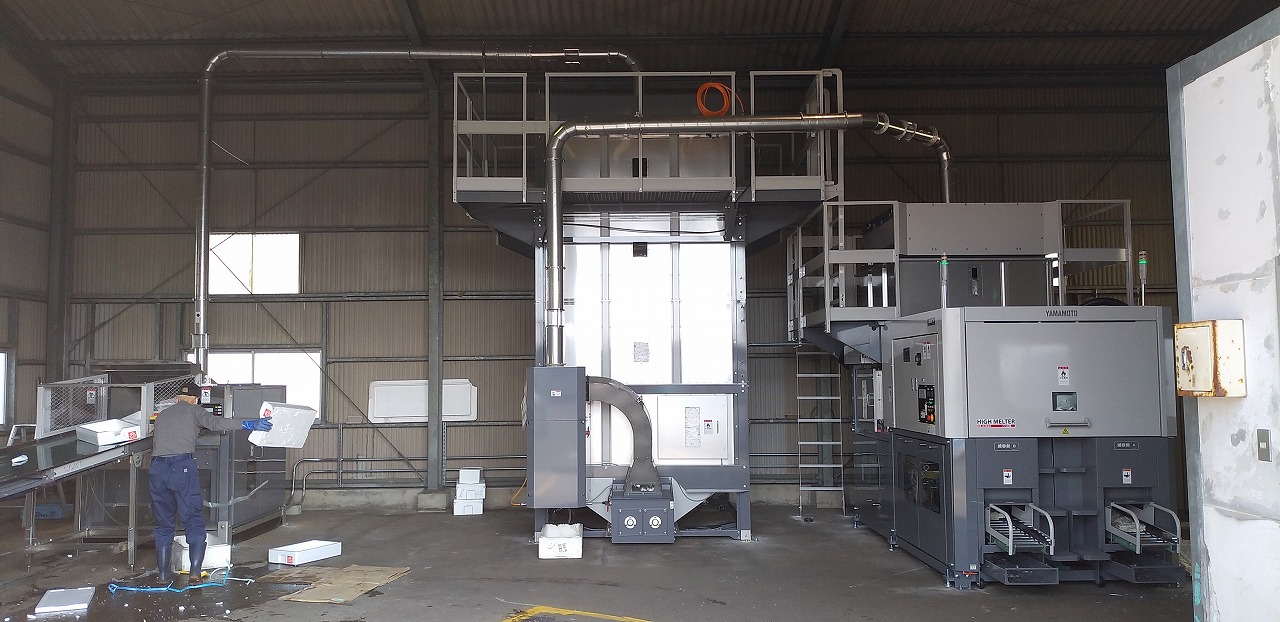
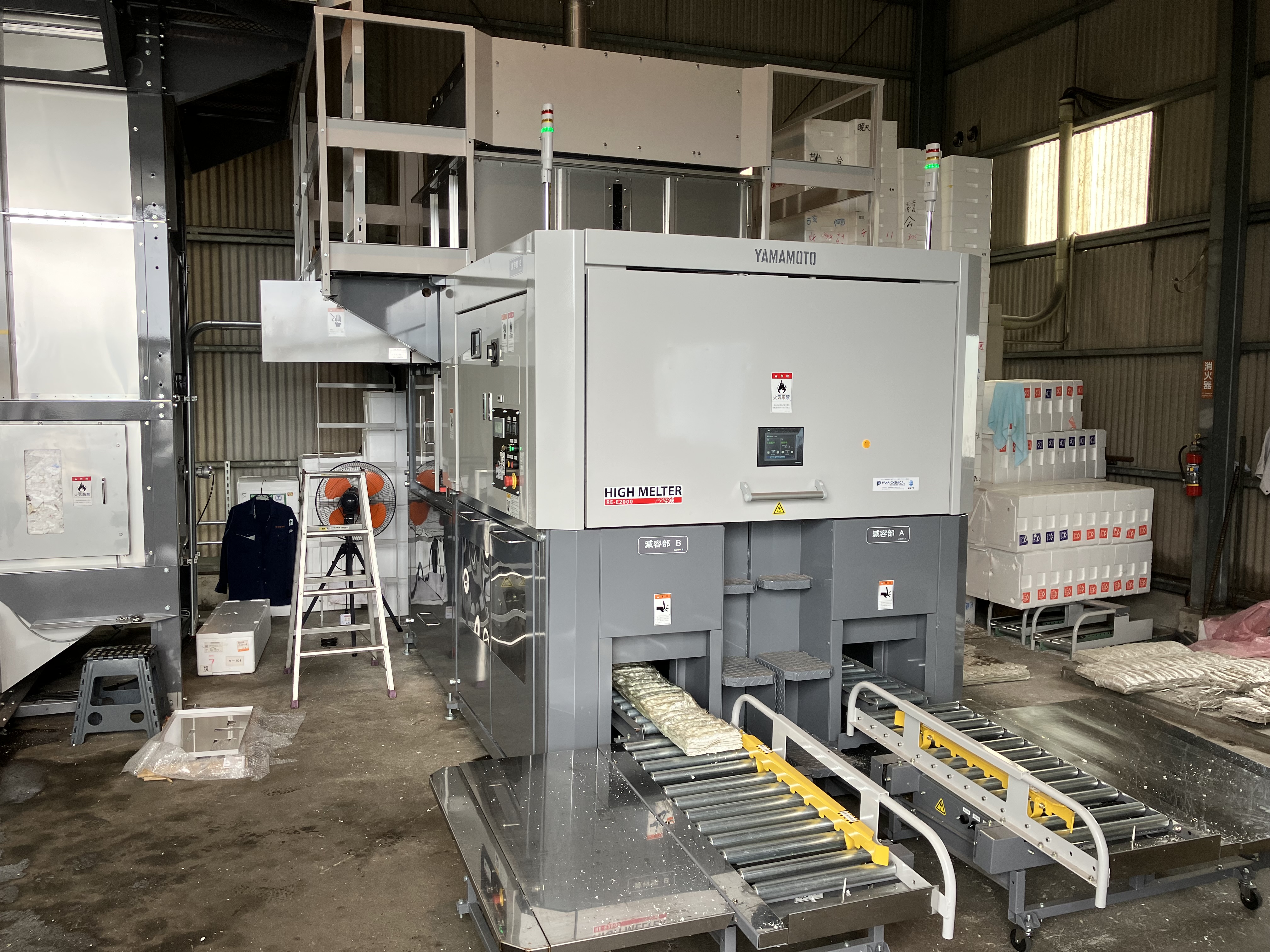
To address these issues, the association replaced the existing machines with YAMAMOTO’s RE-E2000 and RE-E3000 Foam Densifiers, which are equipped with two independent densification systems. The new equipment allows two densification systems to operate simultaneously, significantly shortening processing time while reducing basic electricity costs by approximately half.
A representative of the association commented, “Our basic electricity costs have been reduced by approximately 50%, and our metered electricity charges have been reduced by approximately two-thirds,” highlighting the substantial cost savings. The representative also noted, “Previously, densification took four to five hours, followed by about an hour of cleanup. Now, densification takes about three hours and cleanup only about 15 minutes, significantly reducing the total time required for the work.”
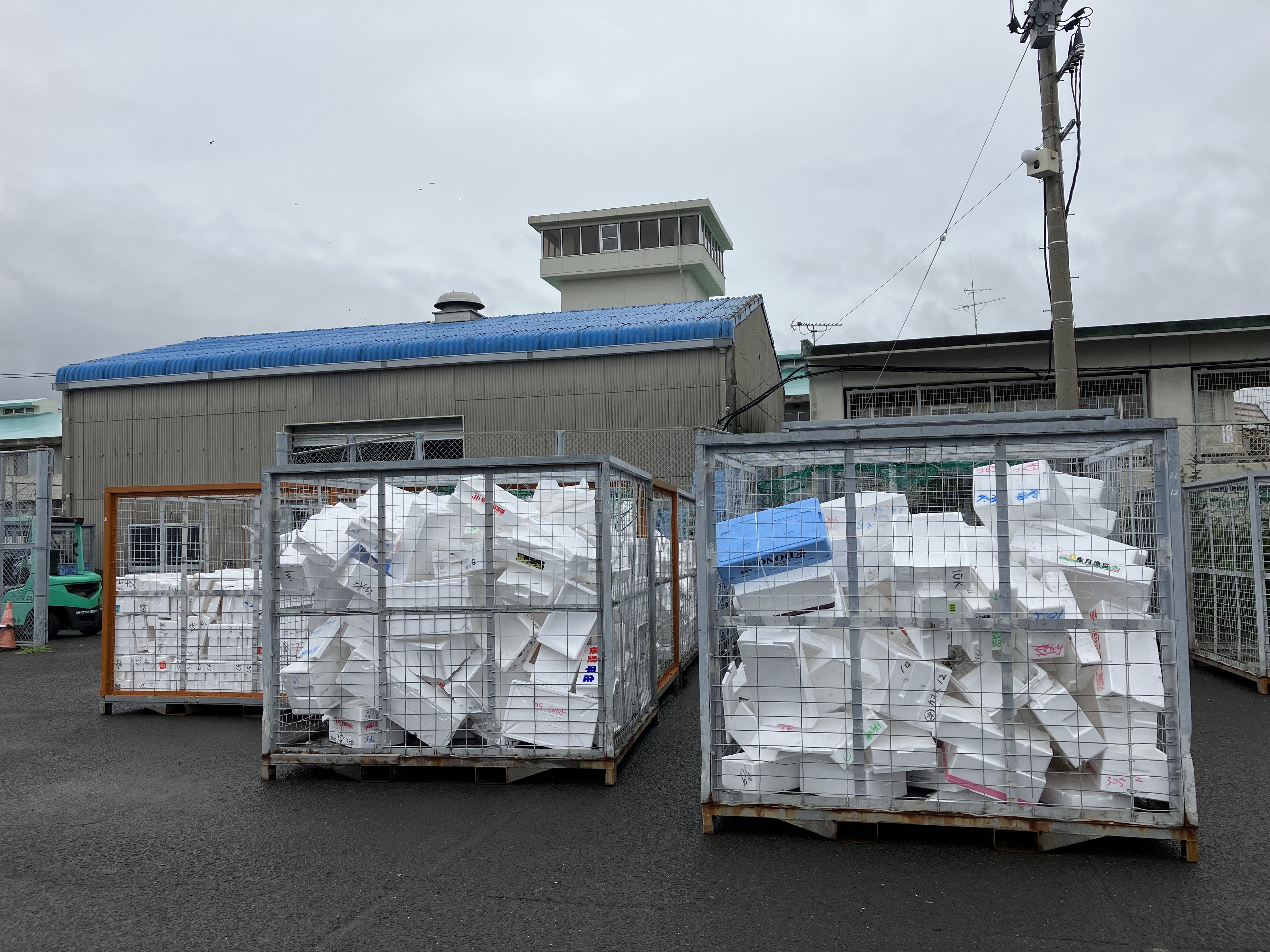
EPS Fish Boxes Generated at the Fish Market
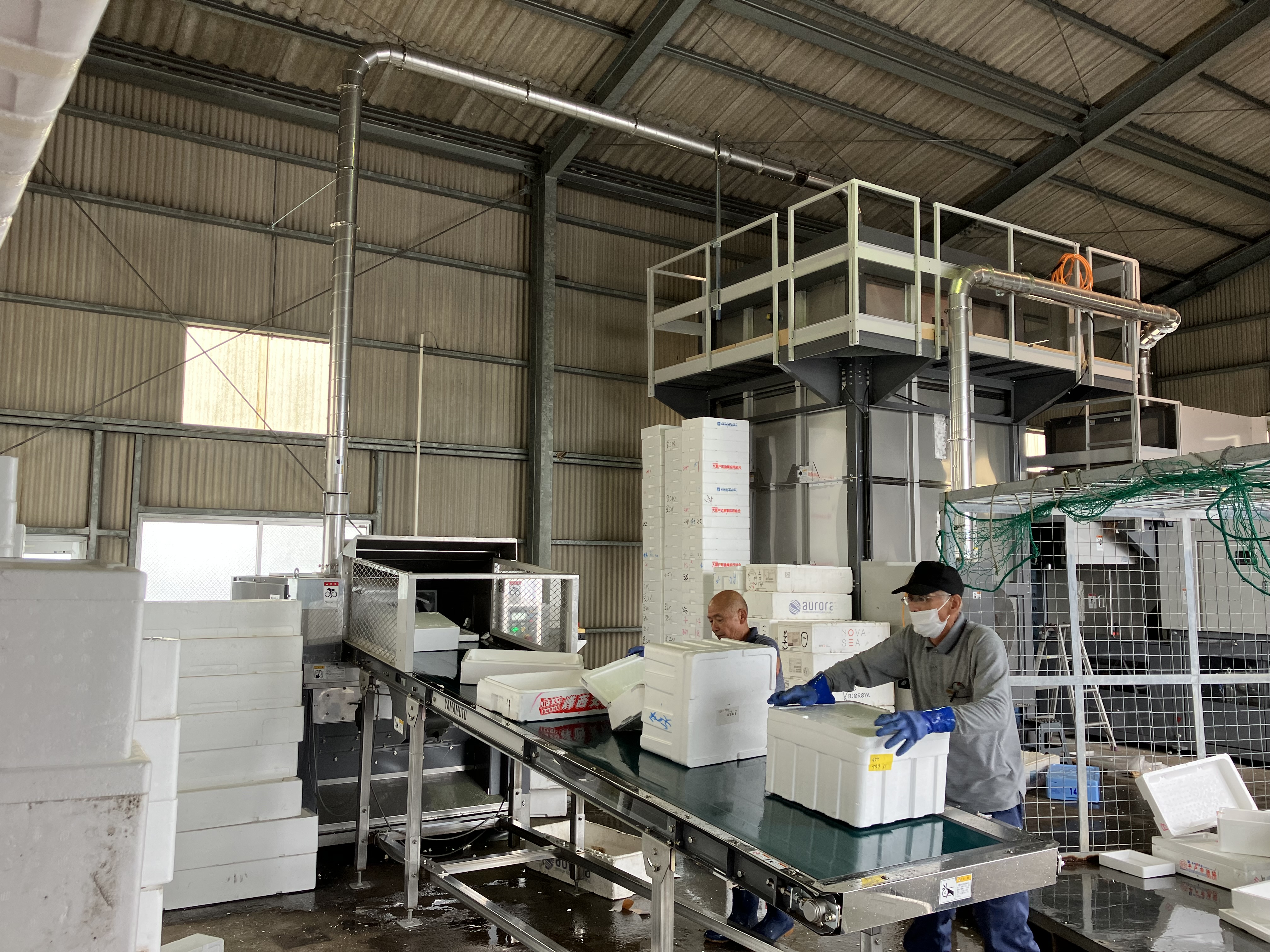
Feeding EPS Fish Boxes into the Shredder
Densified Materials (Ingots) Discharged from the Foam Densifier
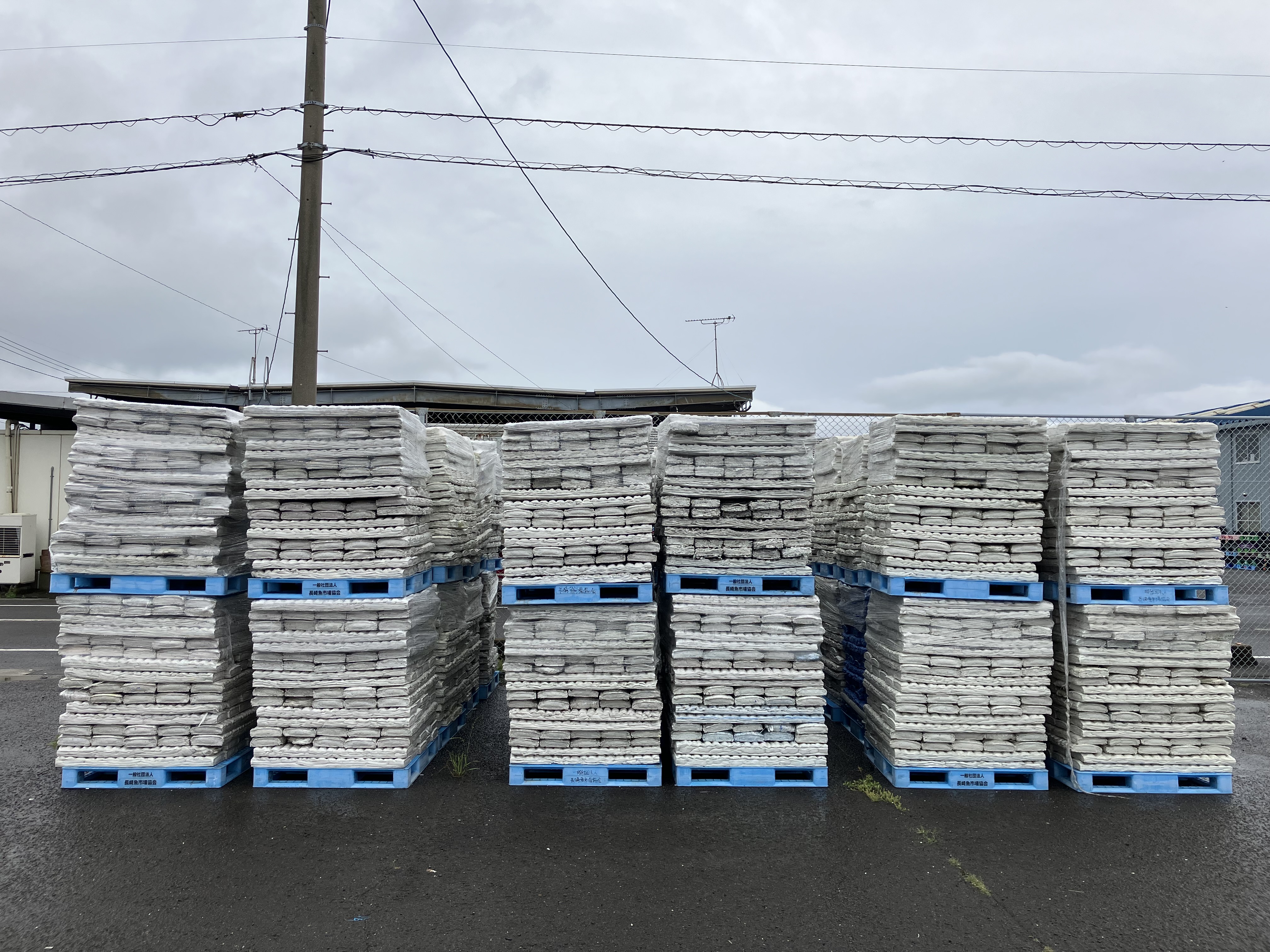
Palletized Densified Materials (Ingots)