Case Studies | Yamamoto Recycling Equipment
Upgrading from an Oil-Fired to an Electrically Heated Densifier Improves Efficiency and Reduces Operating Costs
Application
Densification of EPS Foam (Fish Boxes and Packaging)
Industry: Recycling
Product: Foam Densifiers
Model: RE-E1000
Country: Japan
With the goal of conserving the natural environment and building a recycling-oriented society, the company provides a wide range of services, including general and industrial waste collection and transportation, intermediate processing of industrial waste, solid fuel production (RPF), manufacturing and sales of recycled products, and recycling of various materials. The company receives large volumes of EPS foam, including fish boxes and appliance packaging materials, from municipalities, retailers, and electronics stores. Approximately 12 metric tons (26,500 lb) of EPS foam is collected each month, averaging about 400 kg (880 lb) per day.
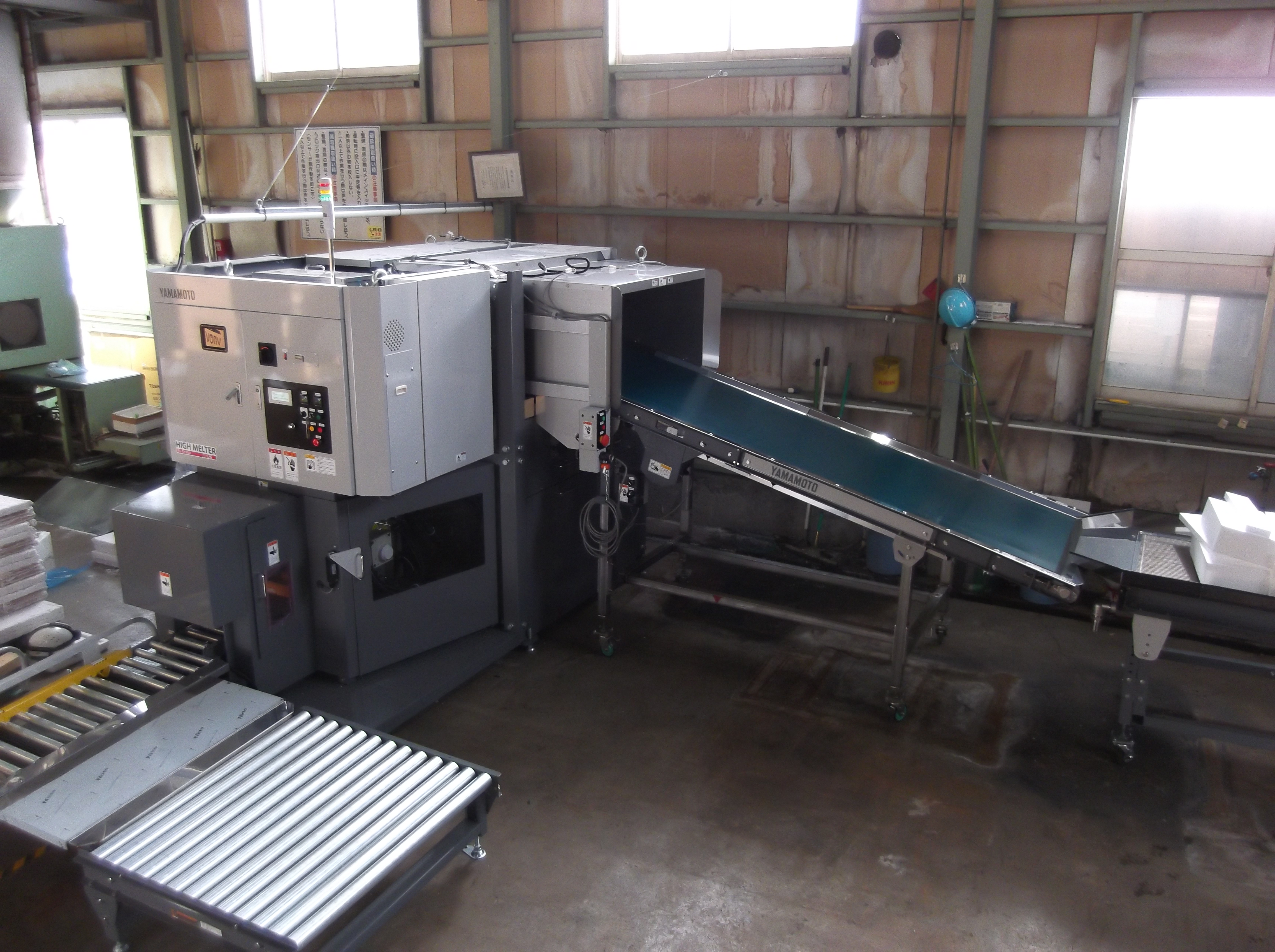
The company had been using an oil-fired foam densifier installed more than 20 years ago. As the machine aged, breakdowns became more frequent and replacement parts became increasingly difficult to obtain, leading the company to consider an upgrade. During this process, a YAMAMOTO sales representative recommended switching to an electric model. In addition to concerns about the aging machine, the company had also been concerned about the risk of fire associated with its oil-fired unit. The company therefore decided to upgrade to YAMAMOTO’s electrically heated RE-E1000 Foam Densifier.
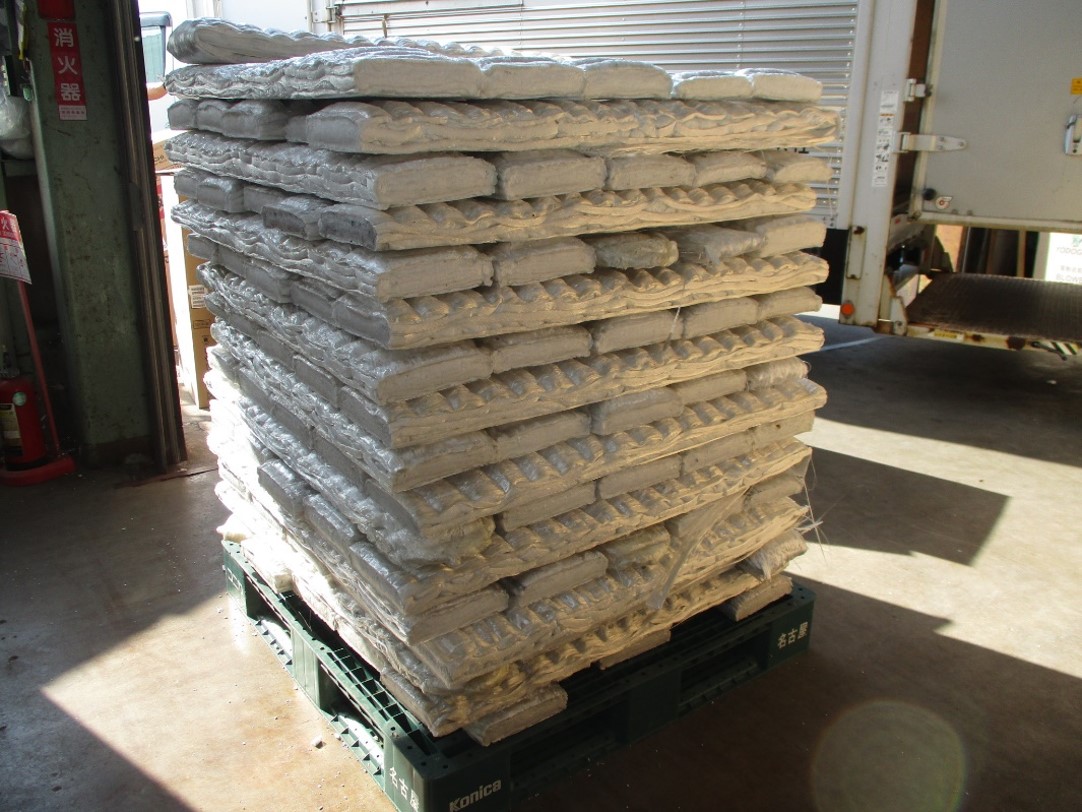
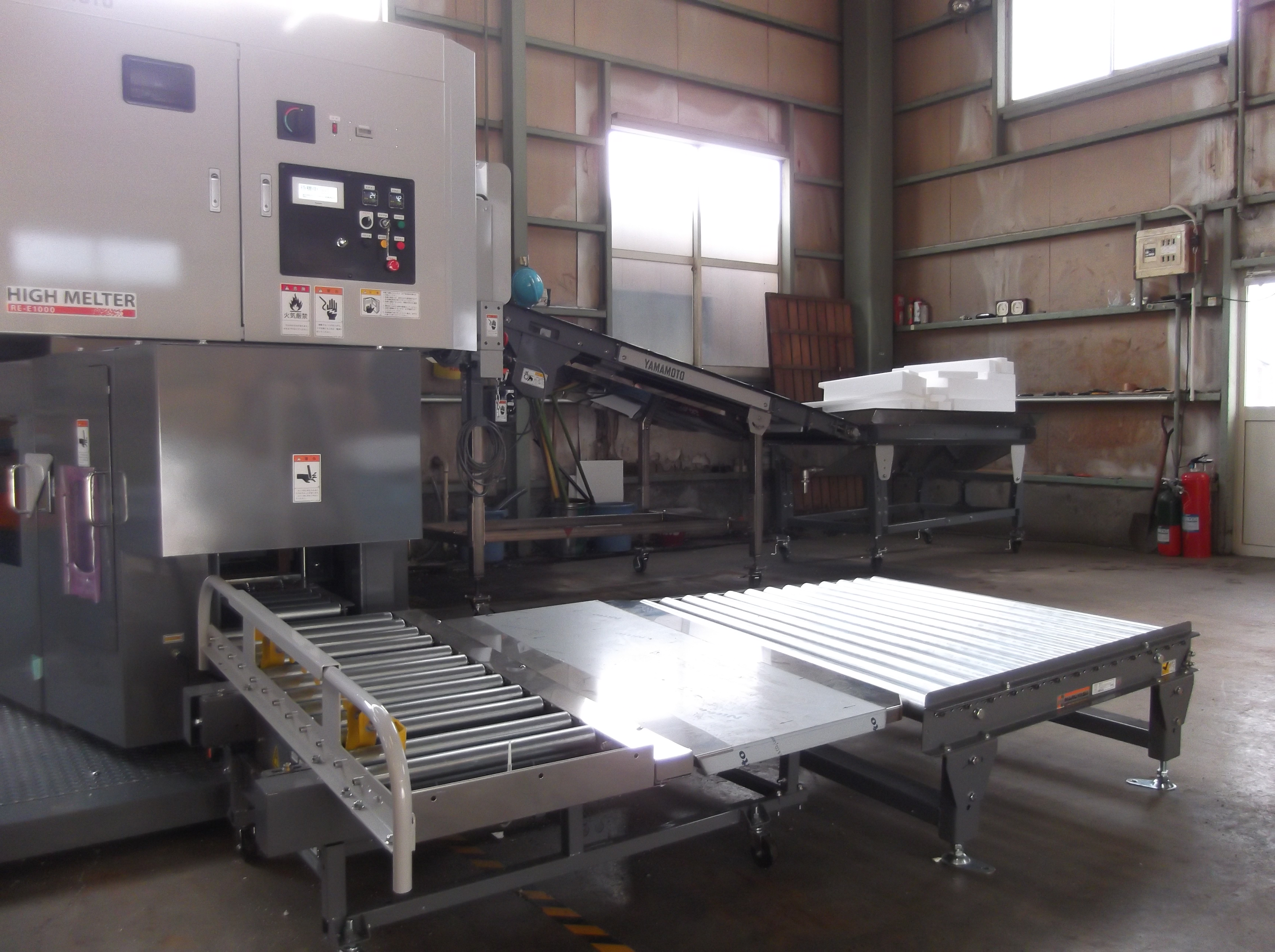
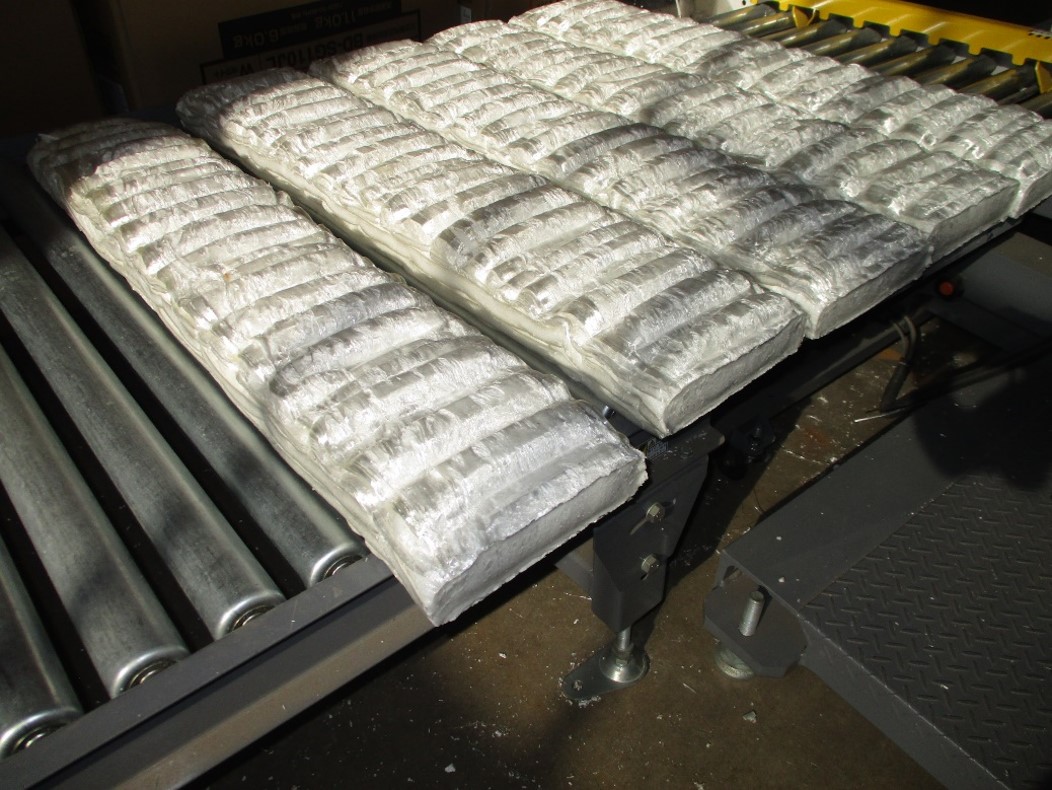
Previously, the company had to wait for the densified materials (ingots) to cool in collection boxes, remove them manually, and then stack them on pallets. This process required considerable time and labor. With the RE-E1000, the densified materials (ingots) are automatically formed and cut, and the optional Automatic Densified Material Stacking Unit arranges them automatically. Operators can then simply transfer the arranged densified materials (ingots) onto pallets. Because each densified material (ingot) is also lighter than before, the new system has significantly improved operational efficiency and reduced operator workload. In addition, the densified materials (ingots) produced by the electric system are cleaner and have a more consistent appearance than those produced by the previous oil-fired machine.
The site manager commented that, in addition to improved work efficiency and product quality, “When we used the oil-fired machine, the work area became extremely hot, especially during the summer. Since switching to the electric model, the working environment has improved significantly. We also appreciate YAMAMOTO’s regular and attentive after-sales support.”
Automatic Densified Material Stacking Unit (Optional)
Densified Materials (Ingots)
Palletized Densified Materials (Ingots)