Case Studies | Yamamoto Recycling Equipment
Higher Capacity and Shorter Warm-Up Time Cut a Full Day of Work in Half
Application
Densification of EPS Foam
Industry: Waste Management
Product: Foam Densifiers
Model: RE-E1000
Country: Japan
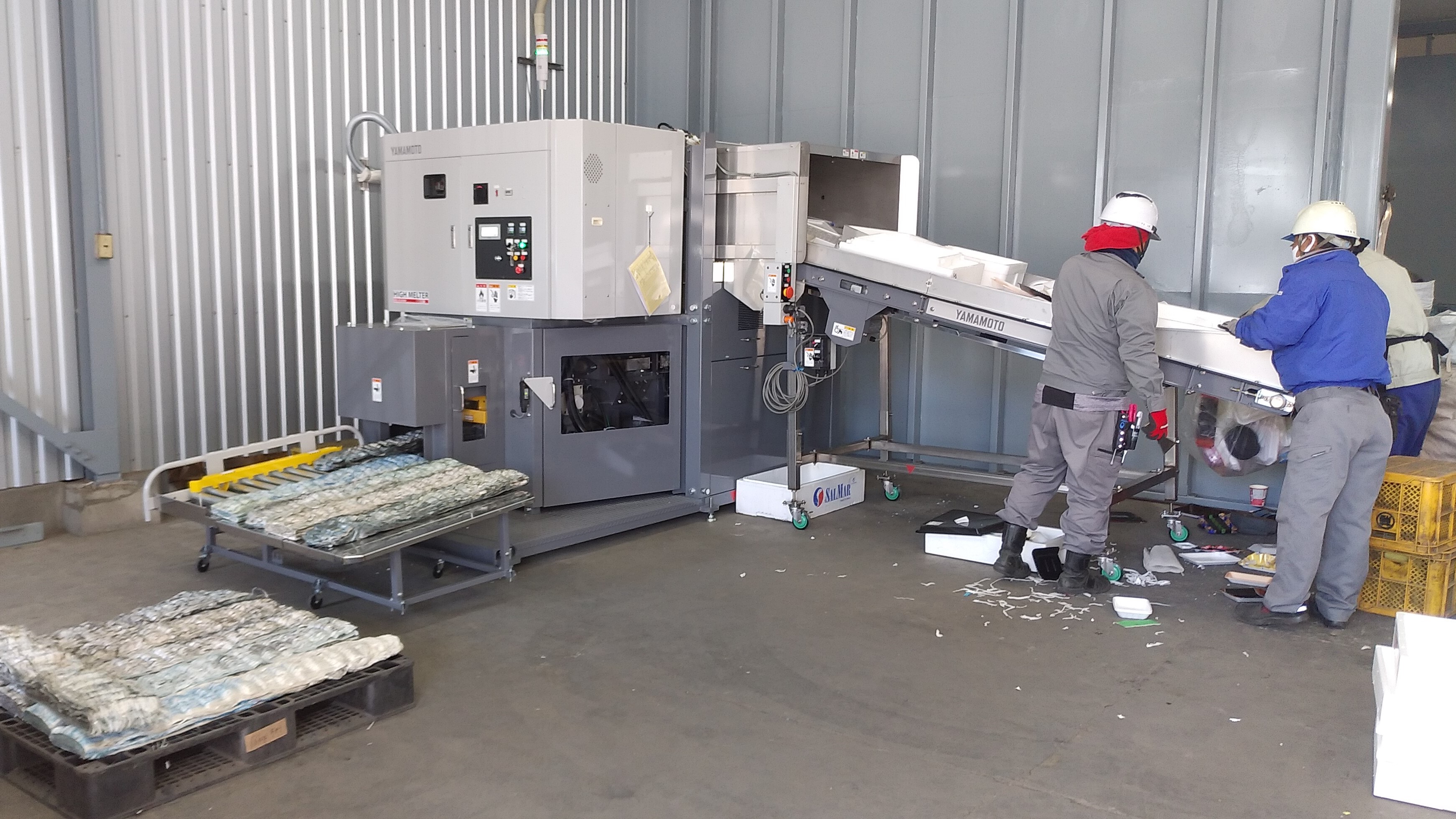
The company provides a range of services to help maintain a safe, secure, and stable local community, including waste collection and processing, water and sewer facility management, building management, and cleaning services. As part of its waste processing operations, the company collects fish boxes and packaging materials from within the prefecture, as well as food trays.
The company had previously used a Foam Densifier from another manufacturer. However, as the machine aged, its processing capacity declined, making it increasingly difficult to keep up with the required volume. In addition, because the previous machine was a large oil-fired model, it required a long warm-up time, made the work area hot, and generated odors.
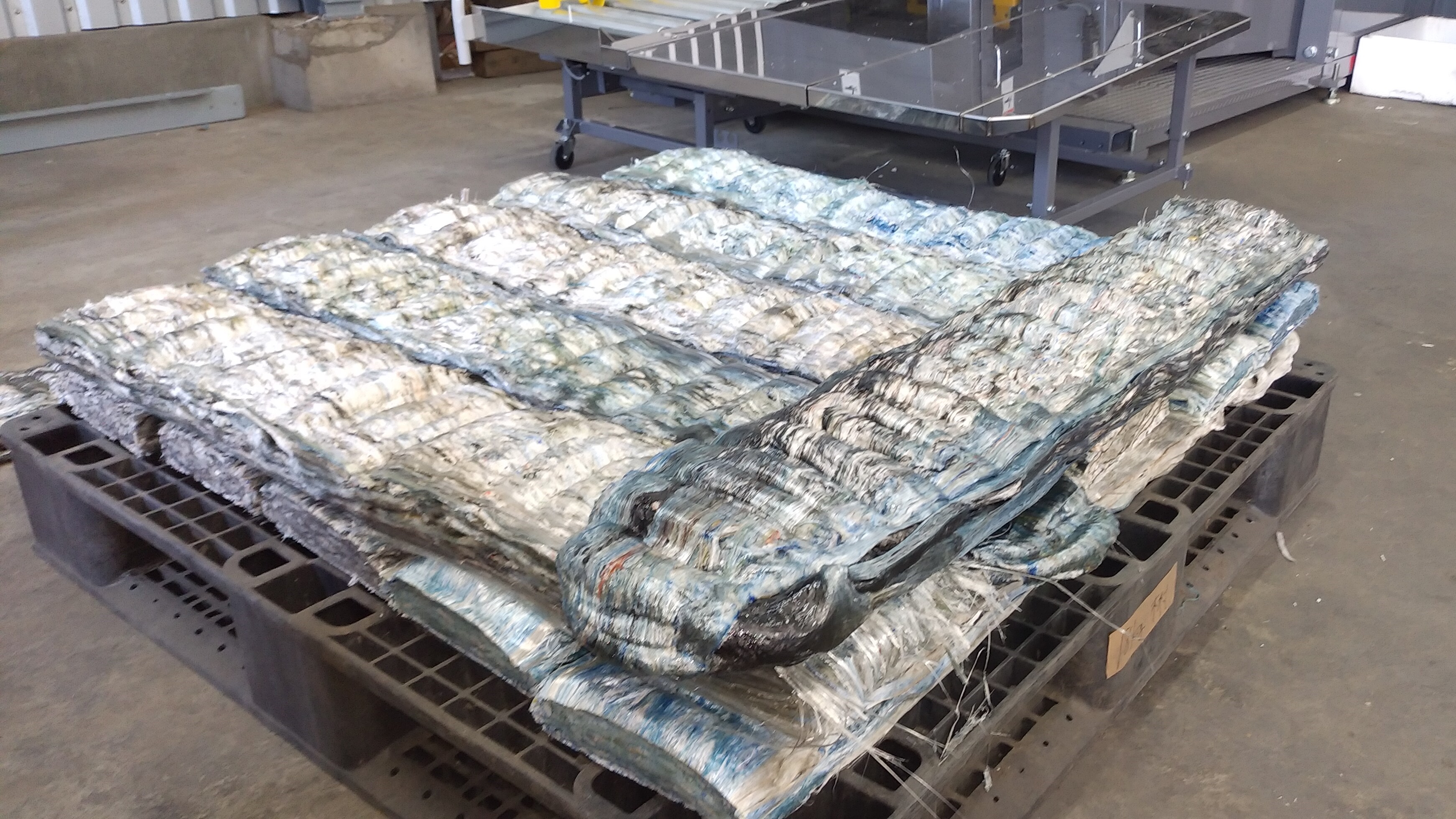
To improve working conditions and enable operators to complete the work more efficiently, the company decided to install YAMAMOTO’s RE-E1000 Foam Densifier. An Automatic Densified Material Stacking Unit was installed at the discharge section, allowing up to 5 densified materials (ingots) to be stacked automatically. This allows operators to focus on feeding EPS foam into the machine.
With the introduction of the RE-E1000, processing capacity increased and warm-up time was shortened, making it possible to complete in half a day work that had previously taken a full day. In addition, the machine generates less heat and odor, and its standard activated-carbon deodorization system has significantly improved the working environment.
A site supervisor commented, “Normal operation is simple - just press the start button. The densified materials (ingots) from our previous machine weighed about 10 kg (22 lb) each and had to be cooled before they could be handled, which made the work difficult. The densified materials (ingots) produced by the RE-E1000 weigh about 5 kg (11 lb) each, and the Automatic Densified Material Stacking Unit stacks them for us. Because they can be handled while still warm, the work has become much easier.”
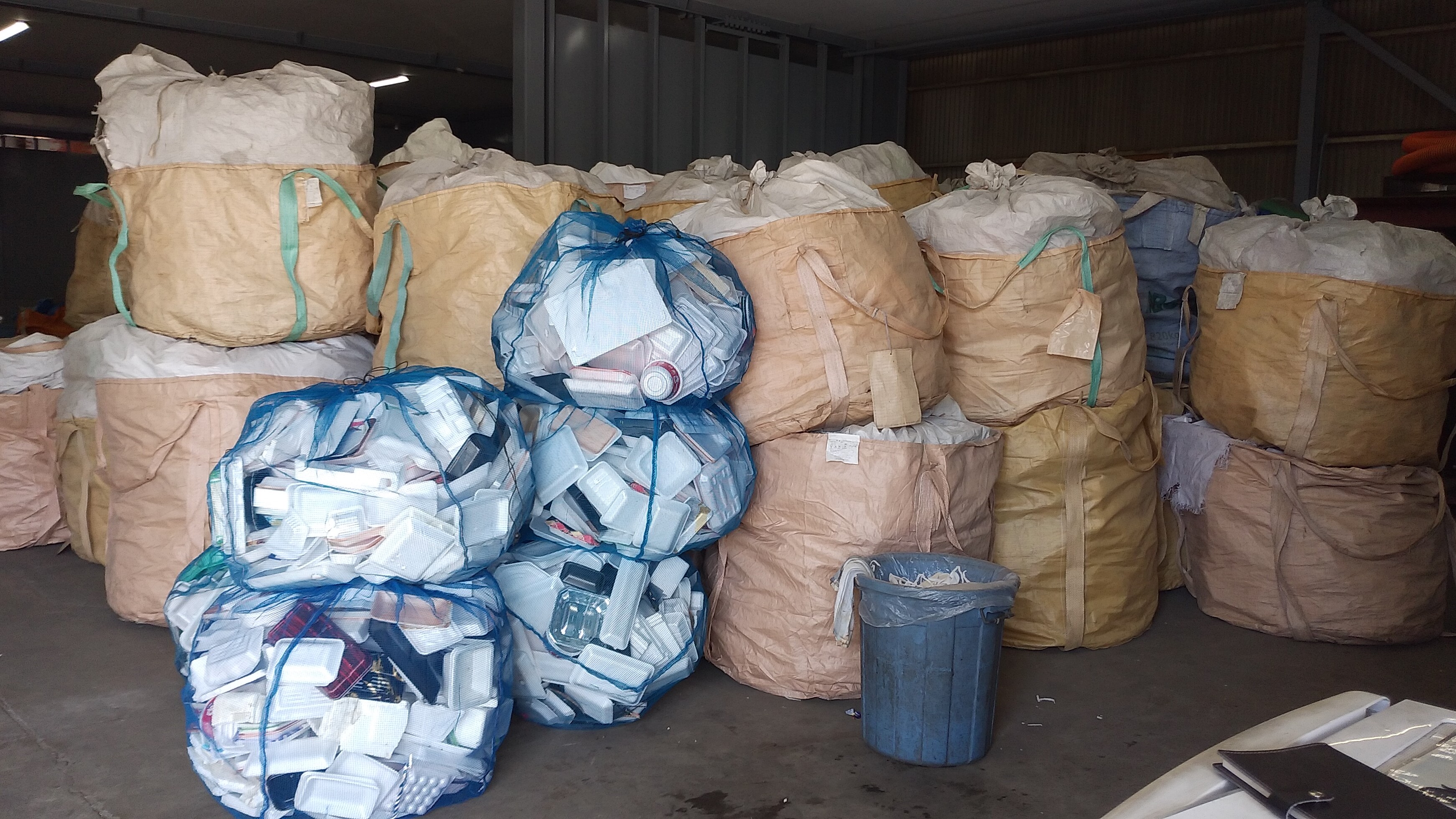
Collected EPS Foam and Food Trays
Palletized Densified Materials (Ingots)